


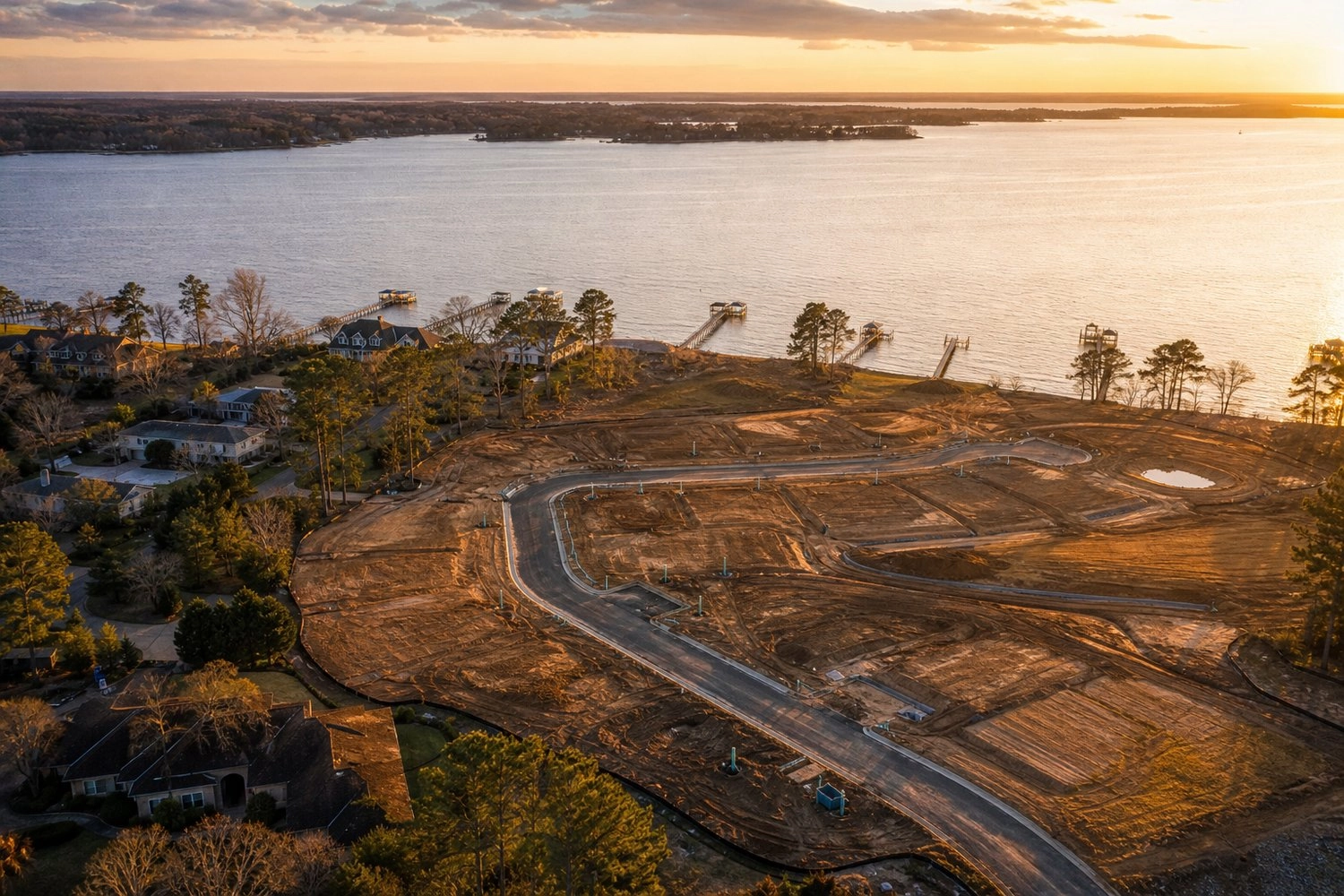
Before you offer on a Great Neck waterfront home, decide what you'll verify on the parcel, not just what you see from the deck. Flood mapping, shoreline structures, water access, drainage, and utilities each need their own answer, and each can be checked while your inspection window is still open.
Why isn't a view check enough when buying a Great Neck waterfront home?
A view check tells you what the water looks like from the deck, but it says nothing about flood exposure, the condition of the bulkhead or dock, how you actually reach the water, or what happens to the yard in a storm. Each of those is specific to the parcel, and each can change what the home is worth to you. Buyers in Great Neck and nearby coastal communities should verify them before committing to an offer.
Key Takeaways
- Hampton Roads had 6,357 active residential listings in September 2026, 16.17% higher than September 2025, but that is a regional count and says nothing about how any single waterfront parcel will perform.
- Flood exposure is parcel-specific, so check the exact lot, house, driveway, and shoreline structures instead of relying on a neighborhood name.
- Virginia's flood-hazard map reflects current conditions only, so pair it with NOAA's sea-level-rise layers to judge long-term ownership risk.
- A standard home inspection may not fully evaluate a seawall, bulkhead, dock, or eroding shoreline, so a marine contractor or coastal engineer may need to weigh in.
- Confirm sewer or septic, water access at different tides, and the paperwork on every shoreline structure before your inspection and negotiation deadlines run out.
How do you check flood and water-level risk on a specific Great Neck parcel?
Pull up the exact address in the state's coastal flood-hazard map and NOAA's sea-level-rise viewer, then compare the house, driveway, dock, and shoreline structures separately. They don't always share the same exposure. A view check can't do this work for you, and neither can a neighborhood label.
Start with today's conditions
Virginia's Coastal Resilience Master Plan Flood Hazard Map separates frequent tidal flooding from storm-surge probabilities and other coastal-flood conditions. Its baseline data runs from mean high water through 0.2% annual-exceedance-probability flooding. That range matters because a lot that handles routine high tides can still look very different in a major storm.
The baseline map describes current-condition modeling. It does not build in anticipated future conditions.
Then look at where water levels are headed
For the longer view, NOAA publishes sea-level-rise data for Virginia in half-foot increments. It covers ocean-connected inundation and low-lying areas that may flood. The Southern Virginia dataset includes Virginia Beach, Norfolk, Chesapeake, Portsmouth, and Suffolk.
The city also runs a dedicated program, Sea Level Wise, that addresses rising sea levels and recurrent flooding and points to flood-risk information and adaptation resources. It's a good place to see what the city itself is tracking.
Walk the property for drainage clues
Maps tell you about the area. Your eyes tell you about the lot. On a showing, look for:
- Low exterior grades and standing water
- Water stains and crawl-space moisture
- Sump-pump dependence
- Saltwater corrosion on fixtures and equipment
- Mechanical equipment that sits low to the ground
- Drainage paths that run toward the structure
In coastal Virginia, the yard, driveway, utilities, and outbuildings can take on water even when the main living area stays dry. Ask the seller directly about past flooding, tidal events, and storm-surge history, and ask what was done about them.
Whether you'll need flood insurance depends on the property and your loan. Talk to your lender and an insurance agent early, not in the last days of your inspection window.
What should you inspect on the shoreline, dock, and water access beyond a view check?
Beyond the view check, you need to inspect the shoreline structures, confirm what actually conveys with the sale, and test whether the route to the water works for how you plan to use it. A conventional home inspection may not fully evaluate a seawall, bulkhead, dock, shoreline slope, drainage outlet, or erosion pattern. Those items often need their own specialist.
Ask for records on every structure
For bulkheads, seawalls, riprap, revetments, piers, boat lifts, and docks, request permits, repair records, engineering reports, warranties, and maintenance history. Then confirm exactly which structures are included in the sale. Also ask whether any portion extends into state-owned submerged lands or otherwise needs separate authorization. Your closing agent (a title company or a real estate attorney, your choice) can help you review the documents, and a marine contractor can tell you what the structure itself is doing.
Treat the shoreline segment as its own question
Two waterfront lots in the same community can sit very differently. The Virginia Institute of Marine Science hosts a Virginia Beach coastal resource management portal with interactive tools for viewing shoreline conditions by locality or river system. Use it to look at the actual segment you're considering instead of assuming every lot in Great Neck, Great Neck Point, Bay Island, or Trantwood Shores has the same erosion, exposure, or stabilization story.
This is where Andrew's background matters. Reading a property's relationship to water, nearby creek systems, and flood risk is the core of how he evaluates waterfront and water-proximity homes. In his experience, those properties are sometimes priced close to comparable inland homes, so the details decide whether you're getting a real value.
Check access and usability, not just ownership
An advertised waterfront isn't automatically usable for your plans. Verify the legal and practical route from the house to the water:
- Stairs, ramps, and walkways
- Shared drives, private lanes, and gates
- Low-clearance areas
- Tidal limitations at low tide, high tide, and after storms
Confirm the water is navigable for your intended use, whether that's a boat, kayaks, or simply a dock to sit on. If boating is the goal, visit at more than one tide.
Match each item to the right expert
| Item | What to verify | Who can evaluate it |
|---|---|---|
| Flood and water-level exposure | The exact parcel in the state flood-hazard map and NOAA's sea-level-rise viewer | Lender, insurance agent, your agent |
| Bulkhead or seawall | Permits, repair records, engineering reports, warranties | Marine contractor or coastal engineer |
| Dock, pier, or boat lift | What conveys with the sale and whether any separate authorization applies | Marine contractor, plus title company or real estate attorney for documents |
| Water access | Stairs, ramps, shared drives, gates, and tidal limits | You, on site at different tides |
| Drainage around the house | Grades, crawl-space moisture, sump dependence, corrosion | General home inspector |
| Wastewater and water supply | Public sewer or water versus septic or a private well | Septic or well specialist, local utility records |
How do utilities, timing, and the market fit into a waterfront offer?
Verify utilities one property at a time, line up your specialists early, and keep the regional market in proportion. A strong view check feeds your decision, but sewer service, inspection scheduling, and negotiating leverage will shape how the deal actually goes.
Verify sewer, septic, and water property by property
The Hampton Roads Sanitation District's statutory service area spans Virginia Beach, Norfolk, Chesapeake, Portsmouth, Suffolk, Hampton, Newport News, Williamsburg, and surrounding counties. That tells you the region is large and varied, not that every coastal home is hooked to the same system. Confirm whether the home is on public sewer and water or private systems. If there's a septic system or well, get current records and arrange the appropriate inspection or testing.
Plan the inspection window around specialists
Coordinate your general inspection with any structural, marine, shoreline, septic, well, HVAC, or environmental specialists early enough to protect your contract's inspection and negotiation deadlines. Exact deadlines depend on your contract, so confirm them with your closing agent (a title company or a real estate attorney) and your agent. Specialists can be harder to schedule than a general inspector, which is why this planning belongs on day one.
Keep the market numbers in proportion
Virginia Business reported that Hampton Roads had 6,357 active residential listings in September 2026, up 16.17% from September 2025. More choices can help any buyer, but this is a broad regional figure, not a waterfront count. The inventory that matters to you is the handful of homes with the shoreline, access, and condition you want. For a closer look at how lot position affects value, see Andrew's breakdown of what waterfront lot position does to resale value in Great Neck, and his overview of Virginia Beach waterfront homes and Great Neck's coastline.
Andrew is straightforward about the trade-off. A Great Neck waterfront home is a lifestyle purchase, not a get-rich plan. The right buyer accepts the upkeep and the water-related risk with eyes open and gets a way of living that's hard to find elsewhere. A thorough view check plus parcel-level due diligence is how you make that choice with confidence. Your exact answers depend on the property, and running them with someone who knows this shoreline is the fastest way to find the red flags.
If you'd like to hear how past clients felt about working with Andrew, you can read his reviews on Google and Zillow.
FAQ
How do I check whether a Great Neck waterfront home is in a flood zone?
Look up the exact parcel in Virginia's coastal flood-hazard map and NOAA's sea-level-rise data. Compare the house, driveway, shoreline structures, and access routes separately, since they may not share the same exposure. Then confirm the details with your lender and an insurance agent.
Does a waterfront home in Great Neck need special flood insurance?
It depends on the property's flood exposure and your loan, so ask your lender and an insurance agent before your inspection deadline. Don't assume the answer from the neighborhood name. The city's Sea Level Wise resources can also help you understand local flood risk.
Can a home inspection evaluate docks, bulkheads, and seawalls?
A conventional home inspection may not fully cover docks, bulkheads, seawalls, or shoreline erosion. If the structure matters to your decision, bring in a qualified marine contractor or coastal engineer. Also request permits, repair records, engineering reports, and warranties from the seller.
How do I verify whether a waterfront property has public sewer or septic?
Ask the seller and check local utility records for that specific address. The Hampton Roads Sanitation District covers a wide regional service area, but that doesn't mean every home is connected the same way. If the home has septic or a private well, get current records and schedule the appropriate inspection or testing.
Are there restrictions on shoreline stabilization or dock work in Virginia Beach?
Shoreline and dock work can require separate authorization, so don't assume you can repair or rebuild freely. Confirm with the relevant local and state authorities before you buy, especially if a structure extends over state-owned submerged lands. The VIMS coastal resource portal is a useful starting point for understanding shoreline conditions.
A good view check is where a waterfront search starts, not where it ends. The flood exposure, shoreline structures, access, and utilities on the specific parcel are what make a Great Neck waterfront purchase hold up after closing. Andrew walks buyers through exactly this process before they write an offer, so the surprises come early, while there's still time to negotiate or walk away.
Ready to evaluate a specific property? Call Andrew Christie at 757-269-9746 to talk through a Great Neck waterfront home. You can also download the Great Neck Insider Report for neighborhood-level market insight.
Equal Housing Opportunity. Andrew Christie, Virginia Real Estate Broker, Atlantic Sotheby's International Realty. Licensed and regulated by the Virginia Department of Professional and Occupational Regulation (DPOR). This article is general information, not legal, tax, or financial advice. Confirm your own numbers and deadlines with your closing agent, tax advisor, or lender.