


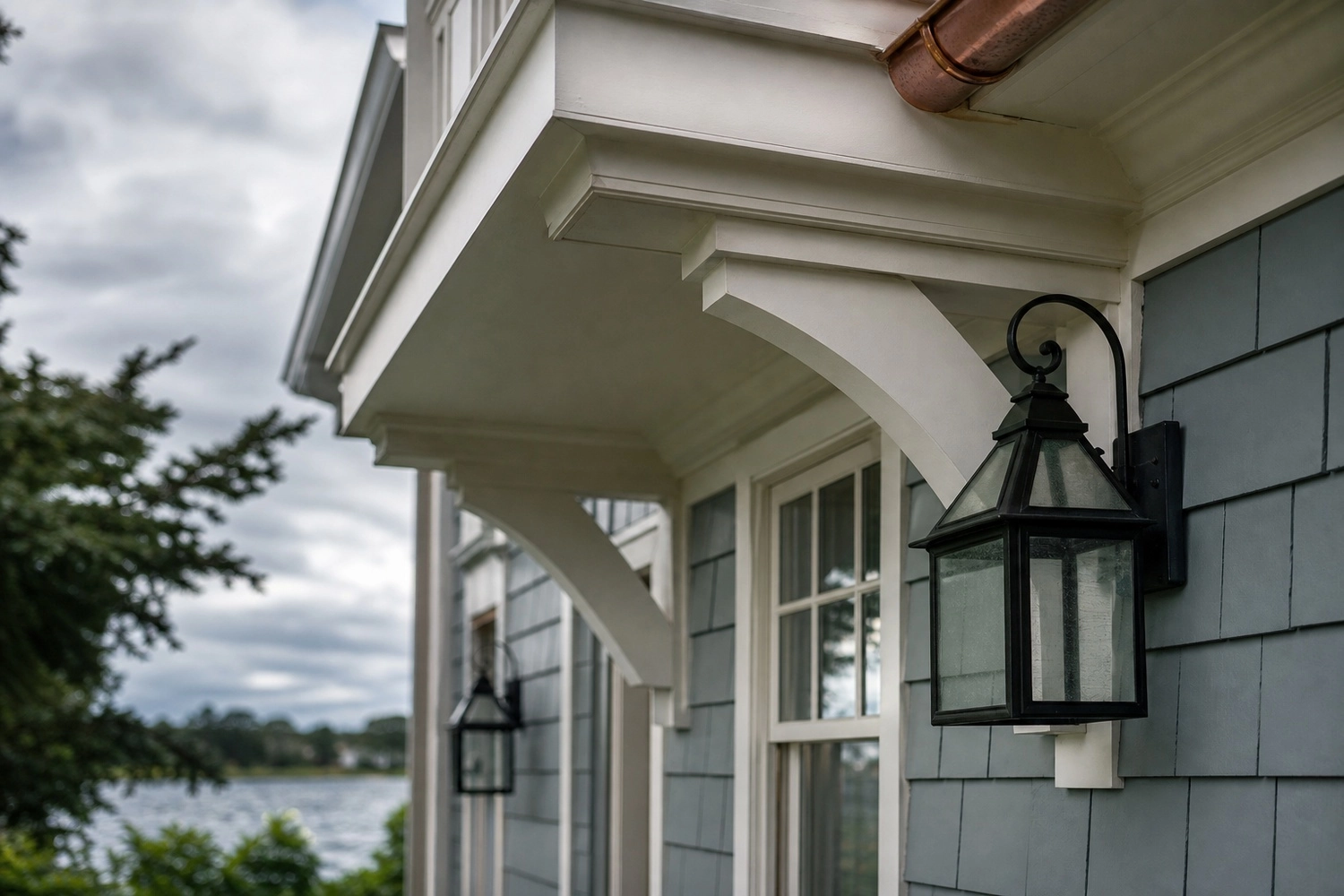
Alanton is a Great Neck-area neighborhood in Virginia Beach bounded by Broad Bay and Linkhorn Bay, where homes range from mid-century ranches to updated coastal contemporaries. Waterfront orientation, elevated foundations, and outdoor living spaces are defining design features, shaped in part by the area's flood zone designations.
What architectural styles and design features define homes in Alanton, Virginia Beach?
Alanton is a Great Neck-area neighborhood in Virginia Beach bounded by Broad Bay and Linkhorn Bay, where homes span mid-century ranches, traditional colonials, and updated coastal contemporaries. Waterfront orientation, elevated foundations, and generous outdoor living spaces are the defining design threads, shaped by the neighborhood's coastal geography and Virginia Beach's flood zone framework.
I've walked buyers through Alanton dozens of times, and the first thing most of them notice isn't a floor plan or a finish level. It's the way the neighborhood sits on the water. Broad Bay on one side, Linkhorn Bay on the other, and the homes here are built around that fact.
That's not just an aesthetic observation. It has real implications for how these homes are designed, how they're permitted, and what you'll want to understand before you buy or renovate one.
The Architecture You'll Find in Alanton
Alanton is not a master-planned community. It developed organically over several decades, which means the streetscape is genuinely varied. That variety is part of what makes it interesting.
Mid-Century and Ranch-Style Homes
A meaningful share of Alanton's housing stock traces back to the 1960s and 1970s. These are single-story or story-and-a-half ranch homes, often on generous lots with mature trees. The bones are solid. The layouts tend to be practical rather than dramatic, with living areas that open toward the rear of the home.
Many of these have been renovated over the years, some lightly and some completely. When a mid-century ranch in Alanton has been thoughtfully updated, it can be a remarkable home. When it hasn't, it's priced accordingly, and it can represent real opportunity for the right buyer.
Traditional Colonials and Two-Story Homes
You'll also find a strong representation of traditional colonial and transitional two-story homes, particularly on interior lots. These typically run from the 1980s through the early 2000s and reflect the design preferences of that era: formal dining rooms, separate living and family spaces, and master suites positioned to capture views where the lot allows.
What distinguishes the better examples in Alanton is how they've adapted to the coastal context. Rear screened porches, elevated decks, and direct backyard access to the water are common upgrades on these homes.
Coastal Contemporary and Custom Builds
The newer construction and full gut-renovations in Alanton tend toward a coastal contemporary aesthetic: open floor plans, large windows oriented toward the water, clean exterior lines, and durable materials chosen with salt air and humidity in mind. Hardie board siding, metal roofing accents, and IPE or composite decking show up frequently.
These homes also reflect a more deliberate approach to elevation and foundation design, which I'll cover in the next section, because in Alanton, that's not optional.
Flood Zones, Elevation, and What They Mean for Design
This is the part of the Alanton conversation that buyers sometimes want to skip. I don't let them.
Because Alanton is bounded by Broad Bay and Linkhorn Bay, a significant portion of the neighborhood falls within Virginia Beach's designated flood zones. The two you'll encounter most are AE and VE.
AE zones carry a 1% annual flood chance, which translates to a 26% probability of flooding over the life of a 30-year mortgage. VE zones are coastal flood zones with that same 1%-or-greater annual flood chance, plus an added storm-wave hazard. Both carry that same 26% lifetime exposure figure, according to the City of Virginia Beach's floodplain management guidance.
What does that mean for the homes themselves? A lot, actually.
- Foundation height: Homes built or substantially renovated in flood zones are typically required to meet base flood elevation (BFE) standards, which affects how high the finished first floor sits above grade. Newer and renovated homes in Alanton often sit noticeably higher than older stock, that's intentional.
- Flood-resistant materials: Below-BFE spaces (garages, utility areas, storage) in flood-zone homes are often finished with materials rated for flood exposure, concrete floors, pressure-treated framing, flood vents in foundation walls.
- Outdoor living structures: Elevated decks, screened porches, and covered outdoor spaces are both aesthetically popular and structurally practical in this context. They keep living areas above the flood plane while maximizing the views.
- Waterfront structures: The City of Virginia Beach's residential building permit guidance explicitly identifies bulkheads, piers, boat lifts, and rip rap as waterfront construction categories that require permits. If a home you're considering has any of these features, understanding their permitted status and condition is part of the due diligence conversation.
Flood insurance is a separate topic from design, but the two are connected. The FEMA National Flood Insurance Program is the primary resource for understanding coverage options, and your lender will almost certainly require flood insurance if the property is in a Special Flood Hazard Area. Verify your specific flood zone and elevation certificate details with your lender and insurance agent before you make an offer.
Permits for Renovations and Additions
If you're buying in Alanton with plans to renovate, add a deck, or build out a waterfront structure, Virginia Beach's permit process applies. According to the City of Virginia Beach's permits page, uncovered decks of any size can be submitted in a residential plan set of five pages or fewer, and additions, alterations, and accessory structures of 500 square feet or less also qualify for that simplified counter-submittal threshold. Larger or more complex projects go through standard online submittal.
Virginia Beach also maintains a Historical Review Board for properties in locally designated historic contexts. If a home you're considering falls under that overlay, exterior alterations may require an additional review step. The city's board page is the authoritative starting point for understanding that process.
The permit landscape here is navigable, but it's worth knowing before you commit to a renovation scope. I walk buyers through this regularly, it's one of those things that's easy to underestimate if you haven't done it before in a coastal Virginia jurisdiction.
| Project Type | Virginia Beach Permit Pathway | Key Consideration |
|---|---|---|
| Uncovered deck (any size) | Simplified counter-submittal (5 pages or fewer) | Flood zone elevation requirements may apply |
| Addition or alteration (500 sq ft or less) | Simplified counter-submittal threshold | Structural changes near flood plane need review |
| Larger additions or complex renovations | Standard online submittal | Plan for longer review timeline |
| Waterfront structures (bulkhead, pier, boat lift, rip rap) | Residential building permit required | Verify existing structures are permitted before purchase |
| Exterior alterations in historic overlay | Historical Review Board process | Additional review step; confirm applicability early |
Sources: City of Virginia Beach Building Permits; City of Virginia Beach Residential Building Permits; City of Virginia Beach Historical Review Board.
What Makes Alanton Worth Understanding Before You Buy
Alanton is the kind of neighborhood where the details matter. The lot position relative to the water, the flood zone designation, the age and renovation history of the home, the condition of any waterfront structures, these aren't afterthoughts. They're the difference between a great purchase and an expensive lesson.
According to Homes.com's Alanton neighborhood profile, the community sits within the Great Neck area, bounded by Broad Bay and Linkhorn Bay, a geography that explains why water-oriented design isn't just a style preference here, it's a practical reality.
The National Association of Realtors consistently shows that waterfront and water-view properties command meaningful premiums over comparable inland homes, and Alanton is no exception. But that premium only holds when the home has been properly maintained, the waterfront structures are permitted, and the flood zone implications are understood and priced in.
If you're thinking about buying in Alanton and want to understand how a specific property's design, flood designation, and condition stack up, that's exactly the kind of analysis I do with buyers before we ever make an offer. The July 2026 Great Neck market update gives useful context on what the broader area is doing right now.
For sellers, the architectural character and condition of your home, especially any waterfront improvements, are significant factors in how I position a listing. Professional photography in Great Neck and Alanton is one of the highest-return preparation steps for exactly this reason: these homes have features worth showing properly.
Frequently Asked Questions About Alanton Homes
What architectural styles are most common in Alanton homes?
Alanton has a genuinely mixed housing stock built over several decades. You'll find mid-century ranch homes from the 1960s and 1970s, traditional colonials and transitional two-story homes from the 1980s and 1990s, and a growing number of coastal contemporary builds and full renovations. The common thread across styles is an orientation toward the water and outdoor living, driven by the neighborhood's position between Broad Bay and Linkhorn Bay.
Are Alanton homes mostly older or new construction?
The majority of Alanton's housing stock is established construction, with roots in the mid-20th century through the early 2000s. New construction is limited, but full gut-renovations and major additions are relatively common. If you're looking at an older home, the renovation history and permit record matter as much as the current condition.
Do waterfront homes in Alanton face special flood or permitting requirements?
Yes. Alanton's position between Broad Bay and Linkhorn Bay means many properties fall within Virginia Beach's AE or VE flood zones, each carrying a 26% flood probability over a 30-year mortgage period according to the City of Virginia Beach. Waterfront structures like bulkheads, piers, and boat lifts require residential building permits, and flood zone designation affects foundation requirements, flood insurance obligations, and eligible renovation scopes.
Is Alanton considered part of the Great Neck area?
Yes. Alanton sits within the broader Great Neck area of Virginia Beach, bounded by Broad Bay and Linkhorn Bay. It shares many of the same coastal characteristics as neighboring communities like Great Neck Point, Bay Island, and Trantwood Shores, including waterfront access, flood zone considerations, and a strong orientation toward outdoor living.
What permits are needed for decks, additions, or waterfront structures in Virginia Beach?
According to the City of Virginia Beach's building permits page, uncovered decks of any size and additions or alterations of 500 square feet or less qualify for a simplified counter-submittal process (five pages or fewer). Larger projects go through standard online submittal. Waterfront structures including bulkheads, piers, and boat lifts require a residential building permit. If a property falls within a locally designated historic context, exterior changes may also require review by the Historical Review Board.
The Right Home in Alanton Starts with the Right Questions
Alanton rewards buyers who do their homework. The architecture is varied and genuinely appealing, the water access is real, and the neighborhood has a character that's hard to replicate elsewhere in Virginia Beach. But the flood zone context, the permit history, and the condition of waterfront improvements are details that change the calculus on any specific property.
That's where local knowledge makes a measurable difference. If you're considering Alanton, whether you're buying, selling, or just trying to understand what a home there is actually worth, I'd welcome the conversation.
Call me directly at 757-502-5077, or download the Great Neck Insider Report for a deeper look at what's happening across the Great Neck area, including Alanton.
Equal Housing Opportunity. Andrew Christie, Virginia Real Estate License #0225199734 | DPOR, licensed in Virginia since 2011, brokerage: Atlantic Sotheby's International Realty. This article is general information only and does not constitute legal, tax, or financial advice; confirm all permit requirements, flood zone designations, and insurance obligations with your attorney, tax advisor, lender, or relevant Virginia Beach city department.